HomeCategoriesDaily FeedBlogAboutContactShare Facts
Underwater
Back to Categories

Category

Underwater

The ocean hides things we were never meant to see. Giant creatures, glowing predators, and mysteries lurking in the deepest parts of Earth.

26 facts

Showing 1–8 of 26 facts

Anglerfish Couples Literally Fuse Together
Underwater
#anglerfish#deep sea#reproduction
Anglerfish Couples Literally Fuse Together

"In the deep ocean, some anglerfish species have evolved one of nature's strangest mating systems. When a tiny male anglerfish finds a female in the pitch-black depths, he bites onto her body and doesn't let go. Over time, his mouth fuses to her skin, their blood vessels connect, and his body gradually degenerates until he becomes little more than a pair of gonads permanently attached to her. The male loses his eyes, fins, and most organs, surviving entirely by absorbing nutrients from the female's bloodstream. In exchange, he provides sperm whenever she needs to reproduce. Some females end up with multiple males fused to their bodies at once, creating a bizarre biological unit that functions as a single organism. This extreme adaptation exists because food is so scarce in the abyssal zone that finding a mate twice is nearly impossible. Rather than risk never reproducing, males have essentially committed to their partner for life by becoming part of her body. The arrangement works, though it's hard to imagine a more unsettling solution to the challenge of deep-sea dating."
Jul 22, 202600
The Ocean's Midnight Zone Has Its Own Daylight
Underwater
#bioluminescence#deep sea#marine life
The Ocean's Midnight Zone Has Its Own Daylight

"Below 200 meters, the ocean enters perpetual darkness, yet bioluminescent organisms create a constant light show invisible to human eyes. Fish, squid, and jellyfish produce their own light through chemical reactions, turning the midnight zone into a landscape of floating constellations. What makes this surprising is the sheer density of it. Scientists estimate that bioluminescence occurs in roughly 90 percent of deep-sea creatures, making it far more common than on land. This isn't random flashing. Many species use bioluminescence for hunting, communication, and camouflage by matching the faint blue light filtering from above, a technique called counter-illumination. Some anglerfish females dangle a glowing lure to attract prey directly into their mouths. Hatchetfish use it to signal potential mates in the absolute darkness. The chemistry behind it varies by species. Some creatures produce light themselves, while others host symbiotic bacteria that glow in exchange for a steady food supply. This relationship has existed for millions of years. If you could see ultraviolet light like many deep-sea animals can, the underwater world would appear completely different, with layers of communication and predation playing out in wavelengths human vision simply cannot reach."

Jul 21, 202600
Fish Can Recognize Human Faces
Underwater
#fish cognition#facial recognition#animal intelligence
Fish Can Recognize Human Faces

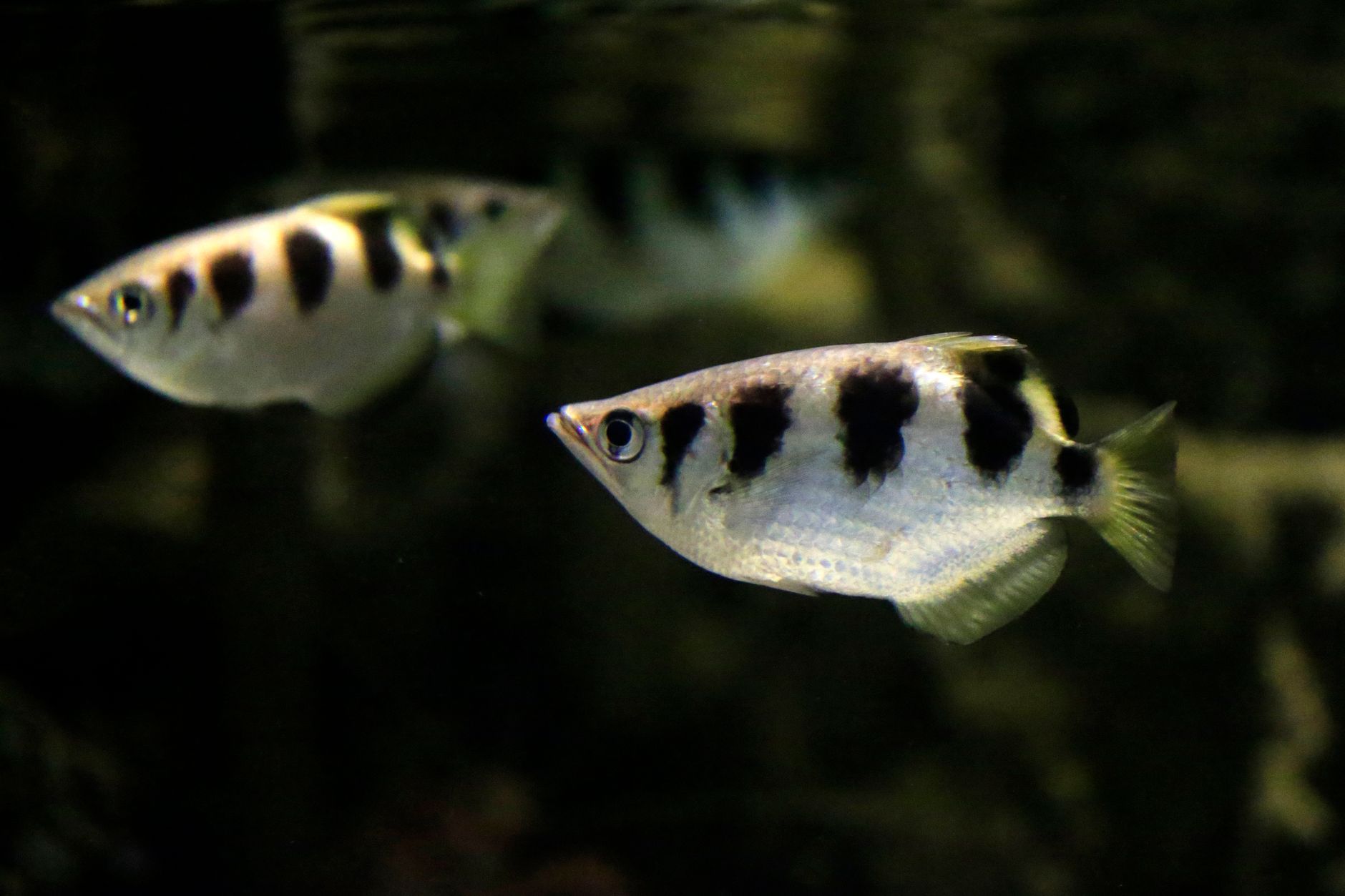
"A 2015 study from the University of Queensland discovered that archerfish can distinguish between human faces with remarkable accuracy. Researchers showed the fish pairs of photographs and trained them to recognize one face by rewarding them with food. When presented with new images, the fish correctly identified their trained face roughly 81 percent of the time, even when the photos were altered or shown at different angles. What makes this finding surprising is that fish brains lack a neocortex, the region in mammals responsible for facial recognition. Yet these small fish managed the task through their own neural pathways. The ability likely evolved because archerfish hunt insects above water and must distinguish individual prey, making facial recognition a practical survival skill that transferred to recognizing human faces in laboratory conditions. This challenges assumptions about which animals possess sophisticated visual processing. It suggests that cognitive abilities we consider uniquely mammalian may have evolved independently in other species when their environment demanded it. The research also opened new questions about consciousness and intelligence in creatures with fundamentally different brain architecture than ours."

Jul 20, 202600
Squid Can See in Total Darkness
Underwater
#squid#bioluminescence#deep sea
Squid Can See in Total Darkness

"Most animals with eyes need light to see. Squid don't follow that rule. Scientists discovered that certain deep-sea squid species possess a light-sensing protein called rhodopsin in their eyes, but they've also evolved a second visual system that doesn't require photons at all. Instead, they can detect the faint bioluminescent glow produced by other creatures around them, even in the pitch-black depths of the ocean where sunlight never penetrates. What makes this stranger is that some squid appear to have lost the ability to produce their own light signals, yet they've gained an enhanced sensitivity to detecting the light of others. Their eyes contain structures called photophores that work alongside traditional rod cells, creating a hybrid vision system that functions in environments where other animals would be completely blind. This adaptation suggests that in the deep ocean, seeing isn't just about collecting photons. It's about reading the chemical and biological signatures written in light by bioluminescent neighbors, turning the darkest parts of the ocean into a landscape of signals only squid can fully interpret."

Jul 15, 202600
Underwater Sounds Travel Four Times Faster Than in Air
Underwater
#marine biology#ocean acoustics#underwater sound
Underwater Sounds Travel Four Times Faster Than in Air

"Sound moves through water at roughly 1,500 meters per second, compared to about 340 meters per second in air. This speed difference fundamentally changes how underwater creatures navigate and communicate. Whales can hear each other across entire ocean basins because sound carries so much farther and faster in water, allowing a blue whale's call to travel thousands of miles without significant degradation. This property also means that underwater explosions, ship propellers, and sonar systems create acoustic pollution that can disorient marine mammals and interfere with their ability to find food or mates. The reason for this speed difference is density. Water molecules are packed much closer together than air molecules, so sound waves encounter less resistance and can oscillate through the medium more efficiently. This same principle explains why swimmers underwater hear muffled sounds from above the surface, even though sound is technically moving faster below. The acoustic environment of the ocean is so rich that some researchers compare it to a crowded concert hall, where countless creatures produce clicks, whistles, and rumbles that layer on top of one another. The discovery that human-generated underwater noise has become a significant stressor for marine life emerged only in the last few decades, yet it now ranks among the top threats to ocean biodiversity."

Jul 12, 202600
The Ocean's Invisible Highway of Sound
Underwater
#sound propagation#marine biology#ocean acoustics
The Ocean's Invisible Highway of Sound

"Sound travels nearly five times faster underwater than it does through air, moving at about 1,500 meters per second in seawater. This creates an acoustic world that operates by completely different rules than the one we experience on land. Whales exploit this property to communicate across entire ocean basins, calling to each other from distances of hundreds of miles away. A blue whale's song can travel farther underwater than a shout travels through air in a crowded room."

Jun 29, 202600
Fish Can Recognize Human Faces
Underwater
#fish intelligence#facial recognition#animal cognition
Fish Can Recognize Human Faces

"In a remarkable display of cognitive ability, researchers have discovered that certain fish species can distinguish between individual human faces with impressive accuracy. Studies conducted on archerfish and other species show they can differentiate between people who feed them versus those who don't, even when shown photographs of human faces. This ability challenges our assumptions about fish intelligence and suggests that brain size isn't the only factor determining facial recognition capabilities. Archerfish, despite their tiny brains, demonstrated they could identify specific human faces in an experiment where they learned to shoot water at the correct person's image to receive food rewards. This skill likely evolved because fish in their natural environments need to recognize individual fish within their social groups to establish hierarchies and cooperative behaviors. The discovery has profound implications for understanding animal cognition and suggests that facial recognition may be more widespread in the animal kingdom than previously believed. Marine biologists now recognize that intelligence in aquatic environments manifests differently than in terrestrial animals, adapted to their unique underwater challenges and social structures."

Jun 28, 202600
Fish Can't Close Their Eyes—They Have No Eyelids
Underwater
#fish anatomy#evolution#marine biology
Fish Can't Close Their Eyes—They Have No Eyelids

"Most fish lack eyelids entirely, a fundamental difference from land vertebrates that seems shocking given how much time they spend underwater. Instead of protective eyelids, fish eyes are covered with a transparent membrane called the cornea, which provides some protection while allowing unobstructed vision in their aquatic environment. This adaptation makes evolutionary sense: eyelids would create drag and turbulence as fish move through water, reducing their hydrodynamic efficiency. Additionally, water itself provides constant lubrication and protection for the eye surface, eliminating the need for eyelids to keep eyes moist—a primary function of eyelids in air-breathing animals. Some fish species, particularly sharks and rays, have developed a modified eyelid-like structure called a nictitating membrane that can cover the eye for protection during feeding, but this is still vastly different from the functional eyelids of terrestrial animals. This means fish are essentially in a perpetual state of alertness, unable to blink or close their eyes to rest them. Their eyes remain open 24/7, constantly scanning their underwater environment for food, threats, and mates. This adaptation perfectly illustrates how millions of years of evolution fine-tunes organisms to their specific environments, with even seemingly universal features like eyelids becoming unnecessary luxuries in the ocean."

Jun 26, 202600